History
1981: the lunch that created a regatta
On 29 September 1981, two boats with nothing in common raced each other between the Tour du Portalet and Pampelonne beach. The loser bought lunch. Out of that wager came the Club 55 Cup, then La Nioulargue, then Les Voiles de Saint-Tropez.
At the start there was no organising committee, no rulebook, no title sponsor, not even a nautical chart. There were two boat owners and a question left unanswered: which of the two was faster?
A Swan against a 12 M JI
On one side, Pride, the Swan 44 belonging to the American Dick Jason. A production boat, fast and modern for its time. On the other, Ikra, a 12 M JI sailed by Jean Lorrain, which is to say the rule used by America’s Cup yachts: long and narrow, drawn for one thing only.
On paper the comparison makes no sense. That is exactly what made it interesting.
From the Portalet to the Club 55
The course was settled without ceremony, and without spending. Rather than buy a nautical chart, Patrice de Colmont and a friend drew it in pencil on a road map, inside the blue area marked “golfe de Saint-Tropez”.
Start at the foot of the Tour du Portalet, at the harbour mouth. Round a mark local fishermen call the Nioulargue, nioulargo in Provençal, “nest out to sea”. Finish off the Club 55, on Pampelonne beach.
The loser would buy the winner lunch.
Ikra crossed first. The prize was a silver bowl taken from French navy tableware. The next day Var Matin ran the headline: “A new America’s Cup is born”. The lunch happened anyway, and that is where the affair took an unexpected turn.
What Patrice de Colmont made of it
Patrice de Colmont, who runs the Club 55, suggested doing it again the following year. The challenge became the Club 55 Cup. The Club 55 Cup drew other boats, and the meeting became La Nioulargue.
The principle set that day has never moved: a classic and a modern, on the same water. It is the event’s DNA, and it is what sets it apart from the other regattas in the Mediterranean.
De Colmont summed up the spirit of the early years in one line: “We all worked like mad through the summer season and, once 1 October came round, it was over. We wanted to use Saint-Tropez for our own pleasure. We had no commercial aim at all.”
1995, then 1999
La Nioulargue ran until 1995. That year a collision between Taos Brett IV and the schooner Mariette cost a crew member his life. The event was suspended for the duration of the legal proceedings.
The crews kept meeting all the same, without any official framework. In 1999, the proceedings closed, the Société Nautique de Saint-Tropez chose to take it back on. The event changed its name: from then on it was Les Voiles de Saint-Tropez.
Forty-five years later
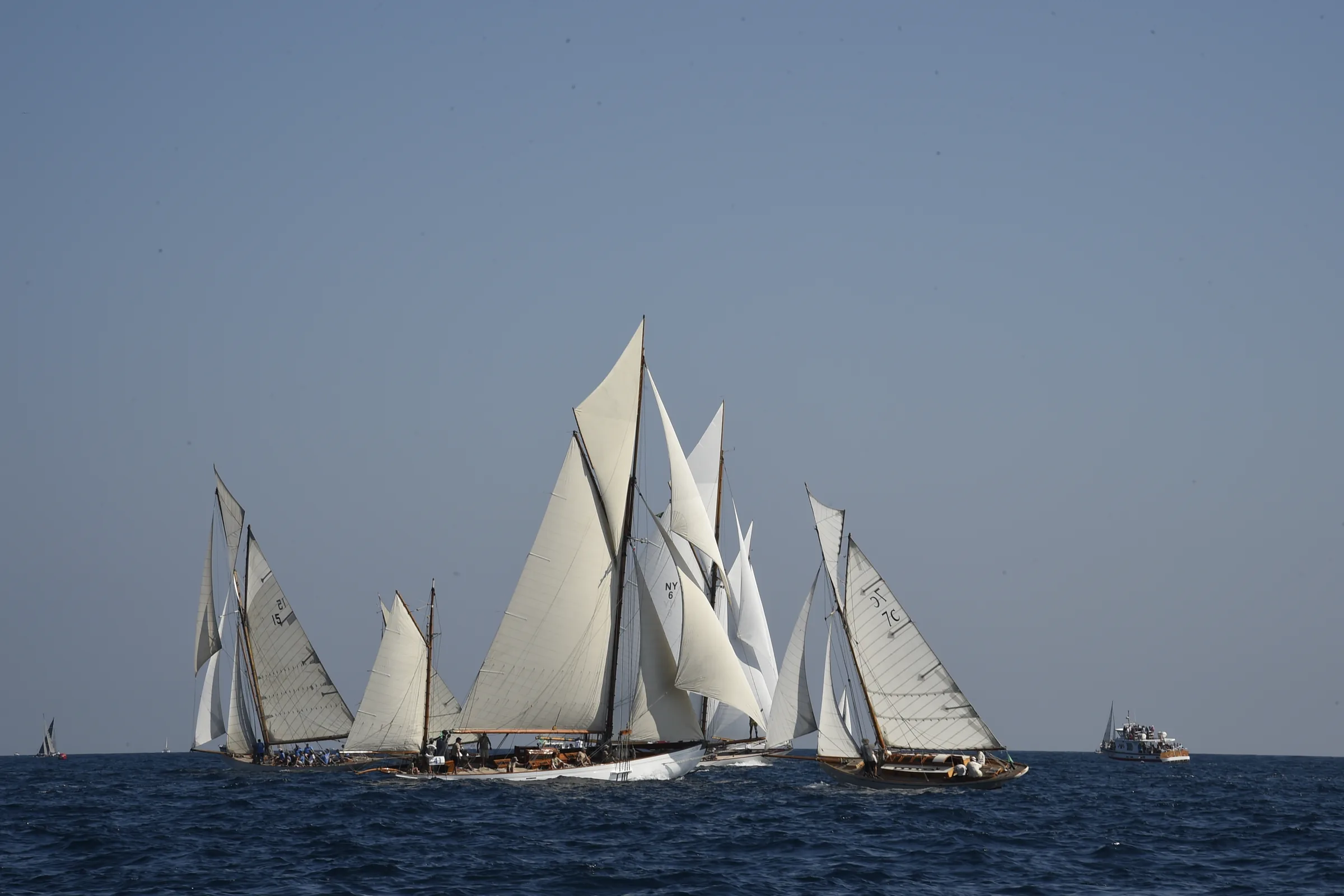
The 28th edition runs from 26 September to 4 October 2026. More than two hundred and fifty boats and close to three thousand five hundred crew are expected, split between the Moderns, the Tradition and the Maxis. At least three J Class yachts are announced in the gulf.
The Club 55 Cup is still on the programme.
The Les Voiles letter
New pieces as they go online, and practical markers as the edition approaches.
Sources
- 1. Les Voiles de Saint-Tropez, History, 1981, Official site of the event. Accessed 31 July 2026. (opens in a new window)
- 2. How it all began, Official site of the event. Accessed 31 July 2026. (opens in a new window)
- 3. La Nioulargue, Wikipedia. Accessed 31 July 2026. (opens in a new window)
In the collection